A pedestrian walking down a commercial street takes roughly three to five seconds to pass an independent storefront. Within that fleeting window, the human brain processes visual cues, registers appetizing aromas if the front door is propped open, and makes an instantaneous, subconscious calculation about whether to break stride or keep moving.
For an independent bakery, the front display window is not merely an architectural barrier keeping the weather out. It is a live stage, a sensory preview, and the single most cost-effective marketing asset the business owns. While digital marketing and social media accounts generate awareness, the display window converts foot traffic into paying customers at the exact moment of intent.
Yet all too often, bakeries treat their front glass as an afterthought. Windows become cluttered with faded promotional flyers, crowded with mismatched platters, or neglected under harsh, unflattering lighting that turns golden-brown crusts into an unappealing beige. Designing an arresting display requires a calculated blend of visual merchandising principles, food safety logistics, and lighting design, all working in unison to turn casual sidewalk strollers into daily regulars.
The Geometry of Sightlines: Mapping the Pedestrian Gaze
A successful bakery window directs the viewer’s eye along an intentional path rather than bombarding it with visual noise. When pedestrians approach a window, their gaze naturally tracks in a sweeping motion, generally settling first on items positioned within an eye-level band between four and five and a half feet from the pavement. Anything placed flat on the floor of a low window well is effectively invisible from six feet away.
To capture attention across varying distances, arrange the space using a three-tier elevation model.
The Foreground: Intimate Details
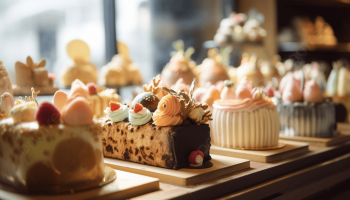
Positioned closest to the glass and slightly lower in the sightline, the foreground should showcase smaller, high-detail treats that reward close inspection. Intricate French macarons, individually glazed petit fours, hand-piped sugar cookies, or glossy fruit tartlets thrive here. Passersby who slow down to inspect these items will naturally step closer to the window, crossing the threshold from distant observer to engaged viewer.
The Midground: The Hero Focal Point
The midground holds the structural anchor of your display. This is the visual heavyweight that pedestrians spot from twenty feet down the sidewalk. A towering multi-tiered celebration cake, an overflowing wicker cornucopia of braided challah, or an architectural pyramid of sourdough boules belongs in this central zone. Every successful window needs a single, undeniable hero element; attempting to give equal prominence to every product on the menu creates a chaotic blur where nothing stands out.
The Background: Depth and Context
The rear of the display connects the street to the interior atmosphere of the shop. Rather than constructing a solid, opaque wall that blocks views into the dining room or kitchen, consider an open or semi-translucent backdrop. Seeing bakers sliding peel boards into a hot deck oven, or catching a glimpse of customers enjoying coffee at small marble tables, provides dynamic motion. This visual transparency signals freshness and energy, inviting the pedestrian to become part of the experience inside.
Illuminating the Crumb: Lighting Physics and Color Temperature
Even the most exquisite kouign-amann looks dull under poor lighting. Bakeries deal with unique visual palettes dominated by rich caramel tones, deep chocolate glazes, and warm, golden-brown crusts resulting from Maillard browning. Standard cool-white fluorescent fixtures or generic commercial LEDs—often rated between 4000K and 5000K—drain the warmth from baked goods, casting a sickly, clinical blue hue over the entire display.
To make pastry crusts glisten and bread look freshly baked, prioritize lighting fixtures with a warm color temperature between 2700K and 3000K. This warm spectrum enhances natural amber, golden, and honey hues, making pastries look rich and inviting.
Equally important is the Color Rendering Index, or CRI. Standard commercial bulbs frequently carry a CRI rating of 70 to 80, which flattens nuances in color. Install specialized display spotlights with a CRI rating of 90 or above. High-CRI lighting reveals the true, vibrant reds of fresh strawberry tarts, the deep velvety brown of dark chocolate ganache, and the delicate dusting of powdered sugar across laminated croissants.
Directionality matters just as much as color balance. Flat, overhead downlighting casts harsh shadows that obscure interior layers. Instead, incorporate angled track spotlights focused on key hero products from a forty-five-degree angle. This cross-lighting creates subtle highlights and shadows along the ridges of braided doughs and scored crusts, emphasizing the artisan texture of your work.
Balancing Food Safety and Visual Realism
One of the greatest operational hurdles in bakery window design is the battle against environmental degradation. Direct sunlight, ambient summer heat, and fluctuating humidity levels quickly destroy fresh baked goods. Butter-rich pastries sweat and lose their crisp lamination, chocolate blooms with white fat crystals, fresh cream breaks down, and delicate royal icing melts.
Bakeries generally solve this dilemma through one of two operational strategies.
The Dummy Display Strategy
For intricate decorated cakes, seasonal showpieces, or items that must sit in unconditioned exterior windows, high-quality dummy displays remain the safest path. Cake dummies carved from dense polystyrene can be frosted with shortening-based mock buttercreams or wrapped in fondant treated with food-grade sealants to resist humidity.
When displaying artificial bread or pastry, modern faux-baked items crafted from polyurethane foam look remarkably indistinguishable from real loaves. If you choose this route, invest in professional-grade models; poorly molded plastic bread undermines consumer trust faster than an empty window.
The Rotational Live Display
If you prefer showcasing actual, edible bakes, treat the window as an active staging area that adheres to strict rotational schedules. Place real artisan loaves in the window during the morning rush, but swap them out or pull them before direct midday sun damages their appearance. For perishable cream items, invest in an integrated refrigerated window showcase that keeps items safe at 40 degrees Fahrenheit while maintaining anti-fog, double-pane display glass.
To mitigate direct thermal heat from the afternoon sun, install UV-filtering window film. These clear ceramic or nano-carbon coatings block up to 99 percent of ultraviolet rays and a significant portion of solar heat without darkening the glass or creating distracting exterior reflections.
Textural Contrast and Strategic Styling Props
A common misstep in bakery merchandising is placing brown items on brown surfaces. When golden sourdough loaves sit on raw butcher block wood against a tan brick wall, the products visually dissolve into the background.
Contrast is what makes food look appetizing from a distance. Pair golden-brown baked goods with cooler, textural surfaces that provide visual relief:
-
Honed white marble slabs that highlight dark crusts and glossy glazes
-
Matte dark slate or soapstone risers that create dramatic, high-contrast stages for dusted pastries
-
Brushed brass or blackened iron display stands that introduce crisp, clean lines without clashing with warm bakes
-
Pale linen fabric or unbleached cheesecloth draped loosely beneath woven baskets to soften hard shelf lines
When selecting decorative props, apply restraint. A single vintage wooden peel, an antique copper bowl holding whole vanilla beans, or a tidy bundle of dried wheat stalks communicates craft and heritage. Conversely, filling the window with plastic flowers, oversized plush toys, or irrelevant seasonal bric-a-brac distracts from the core product. Props should contextualize the baking process, never compete with the bakes themselves.
Legibility, Pricing, and the Psychology of Friction
A pedestrian admiring a display often experiences a moment of hesitation: What is that, and what does it cost?
When a window features no signage, prospective customers often assume the shop is either overwhelmingly expensive or difficult to navigate. Clear, elegant product identification eliminates that hesitation and lowers the barrier to entry.
Keep window signage minimal and legible from several feet away. Avoid handwritten paper tags with uneven cursive or flimsy adhesive labels that peel in the sun. Instead, opt for clean acrylic blocks, small porcelain card stands, or branded matte-black tags lettered in crisp white chalk or metallic ink.
Include the product name, a brief two-to-three-word description of its primary flavor profile, and the price. Highlighting distinct dietary callouts—such as naturally leavened, gluten-free, or plant-based—catches the eyes of consumers scanning the street for specific options that fit their lifestyle.
The Daily Maintenance Rhythm
A brilliant design concept falls apart without rigorous daily upkeep. Window displays sit mere inches from dusty streets, passing dogs, and fingerprint-prone children. The exterior glass requires daily morning washing to remove street grime, water spots, and smudges, while the interior surface must be wiped down regularly to clear stray flour dust and condensation.
Establish a firm operational rhythm for the display:
-
Conduct an exterior sidewalk inspection each morning before opening doors, assessing the window from the perspective of an approaching pedestrian walking in both directions.
-
Clean all glass surfaces and wipe down display risers to remove loose crumbs, stray sesame seeds, or flaky pastry shards that shed onto display trays.
-
Refresh the staging midway through the afternoon, removing partially depleted platters that signal picked-over remnants rather than abundant freshness.
When maintained with discipline, an eye-catching bakery window does more than decorate a building facade. It tells a silent story of craftsmanship, culinary discipline, and uncompromising freshness, effortlessly turning the sidewalk into your bakery’s front porch.