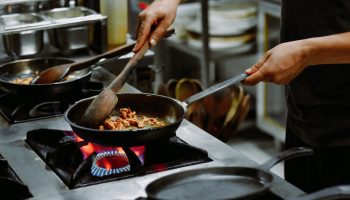
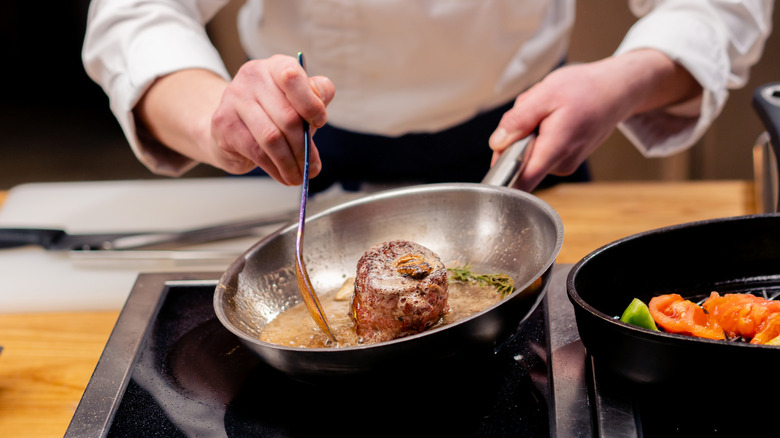
Drop a thick strip steak into a screaming-hot cast-iron skillet, and the reaction is immediate. The sizzle cracks through the kitchen, a plume of aromatic steam rises toward the hood, and within minutes, a pale, wet cut of raw muscle transforms into a mahogany-crusted centerpiece. That transformation is not merely cooking; it is chemistry at its most delicious.
For decades, home cooks were told that searing meat served a simple mechanical purpose: to “seal in the juices.” That persistent culinary myth, popularized in the nineteenth century by German chemist Justus von Liebig, has since been thoroughly dismantled by modern food science. Searing does not create an impermeable moisture barrier. In fact, high-heat cooking causes meat to lose more moisture than gentle, low-temperature methods.
We do not sear to lock in water. We sear to trigger the Maillard reaction, a complex cascade of chemical rearrangements that produces hundreds of entirely new flavor and aroma compounds. Understanding how this reaction works at a molecular level gives you absolute control over browning, allowing you to build deeper crusts, minimize overcooked gray bands, and produce restaurant-quality results on any heat source.
The Chemistry of the Crust: Amino Acids Meet Reducing Sugars
The Maillard reaction is named after the French physician and chemist Louis-Camille Maillard, who first documented the phenomenon in 1912 while studying how proteins synthesize. At its core, the reaction occurs when the amino acids in proteins collide with reducing sugars—such as glucose, fructose, or lactose—under the influence of heat.
Unlike caramelization, which is purely the thermal decomposition of carbohydrates occurring at high temperatures above 320 degrees Fahrenheit, the Maillard reaction requires both proteins and sugars. Once energy enters the system, these molecules bond to form unstable glycosylamines. These compounds promptly rearrange through what chemists call the Amadori rearrangement, setting off a dizzying chain reaction.
As the intermediate molecules fragment, recombine, and polymerize, they generate hundreds of volatile aromatic compounds. Pyrazines introduce savory, roasty, and nutty notes. Thiophenes and furans contribute meaty, earthy tones, while alkylpyridines supply rich, slightly bitter complexities.
The final phase produces melanoidins, large, complex nitrogenous polymers responsible for the deep amber and mahogany pigments that coat the exterior of a properly seared steak, a roasted coffee bean, or the crust of a sourdough boule.
While the Maillard reaction can technically occur at room temperature over months—it plays a quiet role in the long-term aging of serrano ham and vintage balsamic vinegar—it requires intense heat to take place within standard kitchen timeframes. The kinetic sweet spot sits roughly between 280 and 330 degrees Fahrenheit. Below 280 degrees, the reaction crawls at an imperceptible pace. Climb above 390 degrees, however, and you venture past the Maillard reaction into pyrolysis: thermal degradation that burns proteins, turns fats acrid, and creates bitter, carcinogenic char.
The Thermodynamic Enemy: Conquering Surface Moisture
If there is a single universal law in high-heat cooking, it is that water is the sworn enemy of the Maillard reaction.
Water boils and turns to steam at 212 degrees Fahrenheit at sea level. Because the phase change from liquid to gas requires a massive expenditure of thermal energy—known as the latent heat of vaporization—a pan containing liquid moisture cannot rise above 212 degrees until that moisture has completely evaporated.
If you drop a cold, wet steak into a hot pan, the heat does not go toward browning the meat. It goes toward boiling the microscopic film of surface water. The surface temperature stalls at 212 degrees, well below the 280-degree threshold needed for the Maillard reaction to ignite. The meat boils in its own juices, turning a dull, rubbery gray while the interior slowly overcooks.
Professional browning relies on deliberate moisture mitigation before the meat ever touches the cooking surface.
The Dry-Brining Protocol
Salting meat an hour before cooking draws moisture out through osmosis, leaving a wet puddle on the surface right when you want to put it in the pan. To harness the power of salt correctly, practice dry brining twelve to twenty-four hours in advance.
Coarse kosher salt draws cellular water to the surface, dissolves into a concentrated brine, and then gradually reabsorbs into the muscle fibers, seasoning the interior while denaturing proteins so they hold more liquid during cooking.
Uncovered Evaporation
Place your salted proteins on an elevated wire rack set over a rimmed baking sheet, and store them uncovered on the bottom shelf of your refrigerator for twelve to twenty-four hours.
The circulating, low-humidity air inside a modern refrigerator acts as a food dehydrator. Surface water evaporates, leaving the exterior bone-dry and forming a thin, glossy skin known as a pellicle. When this dehydrated surface meets hot cooking oil, heat transfers instantly to the proteins and sugars without wasting a single calorie of energy on boiling water away.
Harnessing Thermal Mass and Pan Material
Pan selection determines how much thermal energy is available to recover heat once cold food hits the metal. Light, non-stick aluminum pans excel at gentle heat distribution, but they possess negligible thermal mass. Drop a thick pork chop into a lightweight pan, and the surface temperature plunges, stalling your sear.
For aggressive browning, reach for heavy cast iron, carbon steel, or thick-gauge stainless steel.
-
Cast Iron: While iron is technically a mediocre thermal conductor compared to copper or aluminum, it has high volumetric heat capacity. It holds a tremendous reserve of thermal energy, meaning its surface temperature barely flinches when cold meat makes contact.
-
Carbon Steel: Heavier and more responsive than cast iron, carbon steel seasons quickly to form a slick polymerized oil layer while retaining the high thermal density required for high-velocity browning.
-
Stainless Steel: Stainless steel promotes fond formation—the sticky, caramelized browned bits left behind on the pan floor that form the foundation for rich pan sauces deglazed with wine, stock, or shallots.
Avoid non-stick coatings for aggressive searing. The synthetic polymers that make Teflon slippery begin degrading at temperatures around 500 degrees Fahrenheit, releasing toxic fumes and losing their non-stick properties long before achieving an exceptional crust.
Fat as a Thermal Bridge
Placing dry meat directly onto dry metal creates an imperfect connection. At a microscopic level, both the bottom of the pan and the surface of a cut of meat are jagged, uneven landscapes full of peaks and valleys. If you cook without fat, heat transfers only where these microscopic peaks collide, leaving the recessed valleys pale and undercooked.
High-smoke-point oil acts as a liquid thermal conductor. It fills the microscopic air pockets between the food and the skillet, distributing heat uniformly across every square millimeter of surface area.
Select neutral fats with high thermal stability, such as avocado oil, clarified butter (ghee), or refined beef tallow. Extra-virgin olive oil and unclarified butter contain water, free fatty acids, and milk solids that burn and turn bitter well before the pan reaches optimal searing temperatures.
Tactical Mechanics: Flipping, Pressure, and Basting
Once the meat enters the pan, how you manipulate it determines whether you achieve an edge-to-edge medium-rare or a thick, overcooked gray band beneath the crust.
The Frequent-Flip Technique
A long-standing piece of kitchen lore insists that steaks should only be flipped once. Food science has thoroughly disproven this rule.
When meat sits untouched on a searing surface for minutes at a time, intense heat penetrates deep into the muscle, cooking a thick layer of exterior tissue well past your target doneness before the outer edge develops an adequate crust.
By flipping the meat every thirty to forty-five seconds, you expose each side to intense, short bursts of heat. While one side faces down to brown, the cooling side sheds residual surface heat into the air, preventing an aggressive thermal wave from driving inward. This approach builds a deep, crisp crust roughly thirty percent faster while keeping the internal gray band remarkably thin.
Uniform Contact and Surface Pressure
As muscle fibers heat up, they contract, often causing flat steaks, chicken cutlets, and fish fillets to cup, curl, or bow upward. This lifting action breaks contact with the pan, leaving the center unseared.
Use a heavy, flat burger press, a small cast-iron skillet, or firm downward pressure with an offset spatula for the first thirty seconds of cooking. This pins the entire surface area against the hot fat, ensuring a flat, uniform sear across the whole cut.
The Butter Baste Finish
While whole butter burns if used as the initial searing medium, it is the ultimate tool for finishing a sear.
During the final two minutes of cooking, drop the pan temperature slightly, tilt the skillet, and add two tablespoons of cold unsalted butter along with smashed garlic cloves and woody herbs like thyme or rosemary.
As the butter melts and foams, its whey proteins and lactose undergo their own rapid Maillard reaction, turning nutty and golden. Spooning this bubbling, aromatic foam over the top of the meat bathes the crust in a cascading wave of caramelized dairy solids, deepening the crust’s color and introducing complex, nutty top notes that oil alone cannot replicate.
Modulating pH for Accelerated Browning
One of the lesser-known variables influencing the Maillard reaction is ambient pH. The chemical cascade accelerates dramatically in alkaline environments, where amino acids exist in an unprotonated state that readily binds with reducing sugars. Conversely, acidic environments slow the reaction down significantly.
Understanding this dynamic allows you to manipulate browning across different culinary applications:
-
Baking Soda on Ground Meat: Tossing ground beef or pork with a tiny pinch of baking soda—roughly one-third of a teaspoon per pound of meat—and letting it sit for fifteen minutes raises the surface pH. When dropped into a hot pan, the meat browns aggressively in half the time, developing rich savory flavor before moisture weeps out and boils the batch.
-
Crispy Poultry Skin: Dusting chicken wings or turkey skin with a mixture of salt and a small amount of aluminum-free baking powder raises the surface pH while absorbing moisture. The alkaline environment weakens peptide bonds, encouraging blistered, crackling, deeply browned skin in a hot oven.
-
Marinade Timing: If your marinade relies heavily on acidic liquids like lemon juice, vinegar, or yogurt, wipe the meat completely dry before searing. Heavy acids actively inhibit the Maillard reaction, delaying browning and encouraging surface steaming.
Mastering the sear is never an accident of luck or brute heat. By systematically stripping away surface moisture, selecting dense cookware, leveraging fat as a thermal bridge, and managing heat through active technique, you turn the complex physics of the Maillard reaction into an everyday kitchen reflex.